


PH Knowledge Base - Featured Guidance: Design Approach & System Choices
The Trust regularly updates the 'How to build a Passivhaus' UK Passivhaus Knowedge Base with the latest, topical guidance. This month we are focussing on the Passivhaus building and component certification process and the associated quality assurance benefits.
Passivhaus should inform and influence every aspect of your design approach and choice of construction system, and should not be seen as a limit on creativity. To achieve the most cost-effective solution, Passivhaus must be understood and integrated into the design approach from the outset.
Guidance Notes
|
Image credit: Passipedia |
Principles of designTo help obtain the high energy standards necessary for Passivhaus, it is crucial that the design of a building allows it to be buildable. The essential principles, both in the design and the build processes, to be considered by the whole team throughout the whole process in delivering a Passivhaus are:
|
|
|
Image credit: ecowho.com |
Choosing the design approachThere are many factors influencing your approach to designing a Passivhaus building, including: location and site; your client's brief, budget, and programme; funding requirements and regulatory standards; and your own design philosophy. Passivhaus should be seen as one of the fundamental factors influencing design as it cannot be achieved simply by meeting each separate technical standard such as airtightness or window U-values. Good Passivhaus design requires a fully integrated design approach, out of which an even greater creative synergy can be developed. This will produce buildings that not only meet the client's brief, and look and feel good, but do actually work with proven energy efficiency and excellent comfort. |
|
 |
Form factorCompactness of building form makes it easier to achieve Passivhaus standards, because the heat loss area (envelope) is minimised in relation to the building's volume. In general the larger the building the easier it is to achieve the standard, including airtightness. However, for Passivhaus we are interested in heat loss per m2 of Treated Floor Area (TFA) – therefore high ceilings and double height spaces all contribute to the volume but not the habitable floor area. As a rule, terraced housing will need less insulation than detached houses, and a block of flats less still. |
|
 |
System choicesPassivhaus does not dictate any particular construction system. Indeed, practically any construction system can be used and adapted to achieve Passivhaus, though each will have its own advantages and challenges for your particular project. The important issue to consider is which construction system is best suited to achieve the stringent requirements of Passivhaus – such as airtightness, elimination of thermal bridging and appropriate U-values– given the particular building type you are designing, its function and the form you are developing. As a general rule avoid mixing different systems within one building, as this introduces interfaces that will make achieving Passivhaus challenging and more expensive than it needs to be. |

Dos and Don'ts
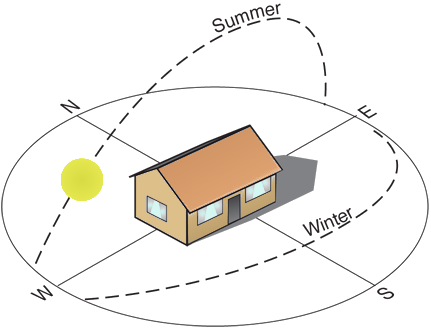
✓ Ensure that orientation, form and fenestration are optimised
✓ Integrate Passivhaus into your design approach from the earliest possible point
✓ Use PHPP as a design tool to understand, influence and improve design
✗ Don't combine unnecessarily different construction systems within one building
✗ Don't assume that Passivhaus dictates any particular construction system
✗ Don't leave Passivhaus until late in the design process or treat PHPP as a compliance check
Get involved
Sign up today
If you are a Passivhaus Trust member and haven't already registered for the Knowledge Base, click here to sign up.
Share your expertise
We are looking for our valued members with a wealth of experience in the Passivhaus industry to share their knowledge and expertise. Once registered, you can upload your own guidance documents, rules of thumb and case studies. You can also join the debate by commenting and rating existing content.
Sponsor a section
There are a number of sections available for sponsorship. To find out more, click here or contact [email protected].
The UK Passivhaus Knowledge Base is sponsored by:
 |
 |
 |
 |
 |
 |
25th July 2016
Get involved with the UK Passivhaus community
 |
 |
 |
 |


